 TIGERFASTENERS
Machine Screws
A machine screw's thread is formed beforehand, and so is the mating internal thread — a tapped hole or a nut. Nominal diameter and pitch have to match exactly for it to engage at all, which is the fundamental difference from the self-tapping family.
Specification options
| Volume range | M1.0 – M5.0 |
|---|---|
| Maximum size | M16 |
| Standards | DIN 84 · DIN 963 · DIN 965 · DIN 7985 · ISO 1207 · ISO 2009 · ISO 7045 · ISO 7046 · JIS B 1101 · JIS B 1111 |
| Materials | see Materials |
| Finishes | see Finishes |
| Minimum order | From 10,000 pcs, depending on the part |
Head styles
%20Pan%20Head'%3e%3ctitle%3e圓頭(盤頭)%20Pan%20Head%3c/title%3e%3cg%20fill='none'%20stroke='%2316181A'%20stroke-width='2.4'%20stroke-linejoin='miter'%20stroke-linecap='butt'%3e%3cpath%20d='M%2034%2046%20L%2034%2037%20Q%2034%2026%2060%2026%20Q%2086%2026%2086%2037%20L%2086%2046%20Z'%20/%3e%3cpath%20d='M%2049%2046%20L%2052%2049.5%20L%2049%2053%20L%2052%2056.5%20L%2049%2060%20L%2052%2063.5%20L%2049%2067%20L%2052%2070.5%20L%2049%2074%20L%2052%2077.5%20L%2049%2081%20L%2052%2084.5%20L%2049%2088%20L%2052%2091.5%20L%2049%2095%20L%2052%2098.5%20L%2049%20102%20L%2052%20105.5%20L%2049%20109%20L%2052%20112.5%20L%2049%20116%20L%2052%20119.5%20L%2049%20123'%20/%3e%3cpath%20d='M%2071%2046%20L%2068%2049.5%20L%2071%2053%20L%2068%2056.5%20L%2071%2060%20L%2068%2063.5%20L%2071%2067%20L%2068%2070.5%20L%2071%2074%20L%2068%2077.5%20L%2071%2081%20L%2068%2084.5%20L%2071%2088%20L%2068%2091.5%20L%2071%2095%20L%2068%2098.5%20L%2071%20102%20L%2068%20105.5%20L%2071%20109%20L%2068%20112.5%20L%2071%20116%20L%2068%20119.5%20L%2071%20123'%20/%3e%3cpath%20d='M%2049%20123%20L%2071%20123'%20/%3e%3c/g%3e%3c/svg%3e)
%20Countersunk%20/%20Flat%20Head'%3e%3ctitle%3e皿頭(平頭)%20Countersunk%20/%20Flat%20Head%3c/title%3e%3cg%20fill='none'%20stroke='%2316181A'%20stroke-width='2.4'%20stroke-linejoin='miter'%20stroke-linecap='butt'%3e%3cpath%20d='M%2030%2026%20L%2090%2026%20L%2071%2046%20L%2049%2046%20Z'%20/%3e%3cpath%20d='M%2049%2046%20L%2052%2049.5%20L%2049%2053%20L%2052%2056.5%20L%2049%2060%20L%2052%2063.5%20L%2049%2067%20L%2052%2070.5%20L%2049%2074%20L%2052%2077.5%20L%2049%2081%20L%2052%2084.5%20L%2049%2088%20L%2052%2091.5%20L%2049%2095%20L%2052%2098.5%20L%2049%20102%20L%2052%20105.5%20L%2049%20109%20L%2052%20112.5%20L%2049%20116%20L%2052%20119.5%20L%2049%20123'%20/%3e%3cpath%20d='M%2071%2046%20L%2068%2049.5%20L%2071%2053%20L%2068%2056.5%20L%2071%2060%20L%2068%2063.5%20L%2071%2067%20L%2068%2070.5%20L%2071%2074%20L%2068%2077.5%20L%2071%2081%20L%2068%2084.5%20L%2071%2088%20L%2068%2091.5%20L%2071%2095%20L%2068%2098.5%20L%2071%20102%20L%2068%20105.5%20L%2071%20109%20L%2068%20112.5%20L%2071%20116%20L%2068%20119.5%20L%2071%20123'%20/%3e%3cpath%20d='M%2049%20123%20L%2071%20123'%20/%3e%3c/g%3e%3c/svg%3e)
%20Oval%20/%20Raised%20Countersunk'%3e%3ctitle%3e半皿頭(橢圓頭)%20Oval%20/%20Raised%20Countersunk%3c/title%3e%3cg%20fill='none'%20stroke='%2316181A'%20stroke-width='2.4'%20stroke-linejoin='miter'%20stroke-linecap='butt'%3e%3cpath%20d='M%2030%2026%20Q%2060%2012%2090%2026%20L%2071%2046%20L%2049%2046%20Z'%20/%3e%3cpath%20d='M%2049%2046%20L%2052%2049.5%20L%2049%2053%20L%2052%2056.5%20L%2049%2060%20L%2052%2063.5%20L%2049%2067%20L%2052%2070.5%20L%2049%2074%20L%2052%2077.5%20L%2049%2081%20L%2052%2084.5%20L%2049%2088%20L%2052%2091.5%20L%2049%2095%20L%2052%2098.5%20L%2049%20102%20L%2052%20105.5%20L%2049%20109%20L%2052%20112.5%20L%2049%20116%20L%2052%20119.5%20L%2049%20123'%20/%3e%3cpath%20d='M%2071%2046%20L%2068%2049.5%20L%2071%2053%20L%2068%2056.5%20L%2071%2060%20L%2068%2063.5%20L%2071%2067%20L%2068%2070.5%20L%2071%2074%20L%2068%2077.5%20L%2071%2081%20L%2068%2084.5%20L%2071%2088%20L%2068%2091.5%20L%2071%2095%20L%2068%2098.5%20L%2071%20102%20L%2068%20105.5%20L%2071%20109%20L%2068%20112.5%20L%2071%20116%20L%2068%20119.5%20L%2071%20123'%20/%3e%3cpath%20d='M%2049%20123%20L%2071%20123'%20/%3e%3c/g%3e%3c/svg%3e)


Drive types


Choosing the thread
-
Coarse
The default. Larger pitch, more tolerant of hole condition, less prone to stripping over repeated assembly.
-
Fine
Greater effective section at the same outside diameter and marginally better self-locking; suits thin walls or fine preload adjustment. The trade-off is sensitivity to hole accuracy and easier stripping.
Where it most often goes wrong
Each of these causes scrapped lots or rework on the floor. None of them is theoretical.
Mixing metric and imperial. M3 and #4-40 look alike. Forcing one into the other destroys both threads, and it is invisible at goods-in — you find out halfway down the hole.
And it may not destroy anything, which is worse. Take the closest pair, #10-32 against M5×0.8: the pitches differ by 0.00625 mm per thread, and the #10-32 pitch diameter is below the M5 nut's, so it starts loose, not tight — 0.19 to 0.39 mm of diametral clearance. Turning that per-thread error into interference needs roughly 16 to 36 threads of engagement, and an ordinary M5 nut offers about 3 to 9. So the wrong screw can pass straight through and report success. Deep tapped holes are where it binds. Outside diameter will not settle it either: with real tolerance bands the closest legal pair sits 0.023 mm apart. The measurement that decides is pitch diameter, still 0.074 mm apart — a thread micrometer or a go/no-go gauge, not a caliper. Which pairs a caliper can and cannot separate.
Phillips driven with a Pozidriv bit, or the reverse. The crosses look identical; Pozidriv has four additional fine ribs in the recess. The wrong bit cams out, and on an automated line that becomes a whole lot of rejects.
Pitch not specified. M3×0.5 and M3×0.35 share an outside diameter. A purchase order that says only “M3” has not specified the part.
How length is measured
One rule covers it: if the head sinks into the work, measure overall; if it stays on the surface, measure under the head.
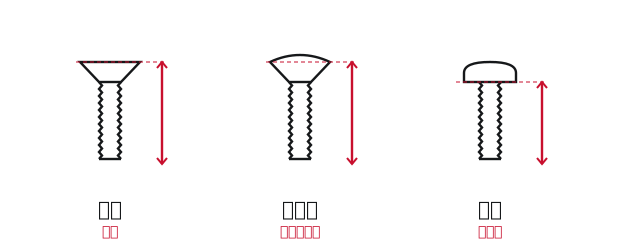
| Head style | Datum | Why |
|---|---|---|
| Countersunk (flat) | Overall length | The head sits flush in the countersink, so it counts |
| Oval (raised countersunk) | Overall to the head diameter | The cone sinks, the dome stays proud; measure to where they meet |
| Pan / round | Under head | The head stays entirely on the surface |
| Button | Under head | Same |
| Hex / hex washer | Under head | Same |
| Socket head cap | Under head | Same |
Full explanation → Where the standards stop at this size → Tolerance stack-up and the screw →
Enquiries
Machine Screws come in a lot of combinations. Tell us the item, size, material, finish, annual usage and application, and we will come back on feasibility and lead time. A drawing or a sample is fastest — quoting against the real part saves a great deal of guessing.
Volume range M1.0 – M5.0, standard fasteners up to M16. Minimum order From 10,000 pcs, depending on the part.
Request a quotation
Tell us the part and the quantity. We will come back on feasibility, lead time and price.
Or email us directly sales@tigerfasteners.com